


06
Jul
How Chemicals Can Impact Weight Loss Resistance
If you’ve been eating healthier, exercising, and making better choices but the scale still won’t budge, you’re not alone.
This is one of the most common frustrations I hear from people.
Many assume weight loss is simply a matter of eating less and moving more. While those habits are important, they’re only part of the picture. More research is showing that certain environmental chemicals may influence metabolism, hormone function, and the way the body stores fat, making weight loss more challenging for some people. pmc.ncbi.nlm.nih
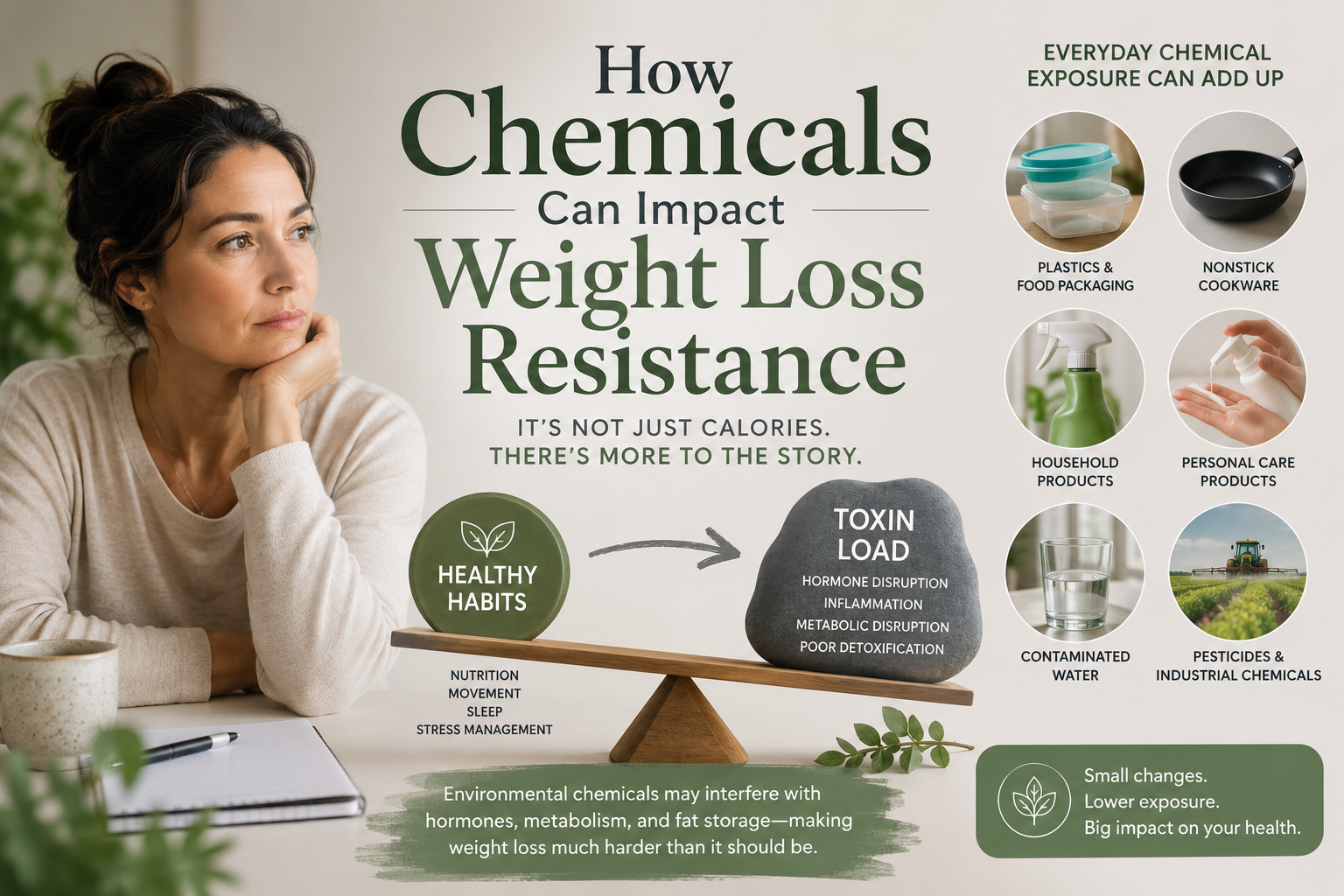
These chemicals are often referred to as obesogens because they may influence how the body regulates weight and metabolism. They can be found in plastics, pesticides, food packaging, contaminated water, household products, and other everyday environmental exposures. news.clemson
What Weight Loss Resistance Means
Weight loss resistance is exactly what it sounds like: you’re putting in the effort, but your body isn’t responding the way you expect.
You may be eating nutritious foods, exercising consistently, and making healthy lifestyle changes, yet you still struggle to lose weight or notice meaningful progress.
There are many reasons this can happen, including hormone imbalances, blood sugar regulation, inflammation, stress, sleep, and nutritional status. Environmental toxins may also be one of the many pieces contributing to the bigger picture. pubmed.ncbi.nlm.nih
Some research suggests that persistent environmental pollutants, including PFOS and similar compounds, may affect glucose regulation during calorie restriction, potentially making it more difficult for the body to respond to healthy lifestyle changes. news.clemson
How Chemicals May Affect Metabolism
One of the ways environmental chemicals may influence weight is through hormone disruption.
Some chemicals are classified as endocrine disruptors, meaning they may interfere with hormones involved in appetite, thyroid function, insulin sensitivity, and fat storage. Since hormones play such an important role in metabolism, even subtle disruptions may influence how the body functions over time. pmc.ncbi.nlm.nih
Another area researchers are studying is mitochondrial health. Mitochondria are often called the “powerhouses” of our cells because they help convert food into usable energy. Some environmental contaminants may reduce how efficiently this process works, which could contribute to lower energy production and decreased metabolic efficiency. news.clemson
Inflammation may also play a role. Research suggests that certain environmental chemicals, including PFAS, may influence inflammatory pathways and lipid metabolism, potentially making it more difficult for the body to regulate fat storage and energy use. news.clemson
Common Chemicals Linked to Weight Issues
Some of the environmental chemicals most commonly discussed in research include PFAS, PCBs, pesticides, phthalates, and BPA-related compounds. These can be found in everyday items such as nonstick cookware, food packaging, plastics, pesticides, water-resistant materials, and fragranced personal care products. pmc.ncbi.nlm.nih
Why This Matters
Weight loss is rarely about one thing.
If you’re also dealing with chronic stress, poor sleep, blood sugar challenges, hormone changes, or nutritional deficiencies, environmental toxins may represent one additional stressor your body is trying to manage. They may not be the sole reason you’re struggling, but they can become another piece of an already complicated puzzle. pmc.ncbi.nlm.nih
This is why I encourage people to look at the whole picture instead of focusing only on calories. Supporting nutrition, sleep, stress resilience, and reducing unnecessary environmental exposures may all work together to help your body function more efficiently. pubmed.ncbi.nlm.nih
Practical Ways to Reduce Exposure
The good news is you don’t have to change everything overnight.
Small, consistent changes can make a meaningful difference over time.
Here are a few simple places to start:
Use glass, stainless steel, or cast iron instead of plastic or nonstick cookware whenever possible. news.clemson
Choose fragrance-free cleaning and personal care products when you can, since fragrances may contain phthalates. pmc.ncbi.nlm.nih
Drink filtered water if contamination is a concern in your area. news.clemson
Wash fruits and vegetables thoroughly, and choose organic options for higher-residue foods when it fits your budget. pmc.ncbi.nlm.nih
Avoid heating food in plastic containers. news.clemson
Looking at the Bigger Picture
At Nutritional Wellness Center, we believe lasting wellness comes from understanding the many factors that influence how your body functions.
Environmental toxins aren’t the only reason someone experiences weight loss resistance, but they are one factor that is often overlooked.
When we begin looking beyond calories and consider nutrition, hormones, stress, sleep, digestion, and environmental exposures together, we often gain a more complete understanding of what the body may need to function at its best. pmc.ncbi.nlm.nih
Closing Thoughts
If you’ve been feeling frustrated because you’re doing everything “right” and still not seeing the results you hoped for, don’t assume it’s simply a lack of willpower.
Sometimes the answer isn’t trying harder.
Sometimes it’s taking a closer look at the hidden stressors that may be affecting how your body functions.
When we support the body as a whole, we give it the opportunity to respond the way it was designed to.
This article is intended for educational purposes only and is not intended to diagnose, treat, cure, or prevent any disease. If you have concerns about your health, please consult with your healthcare provider.