

12
Jun
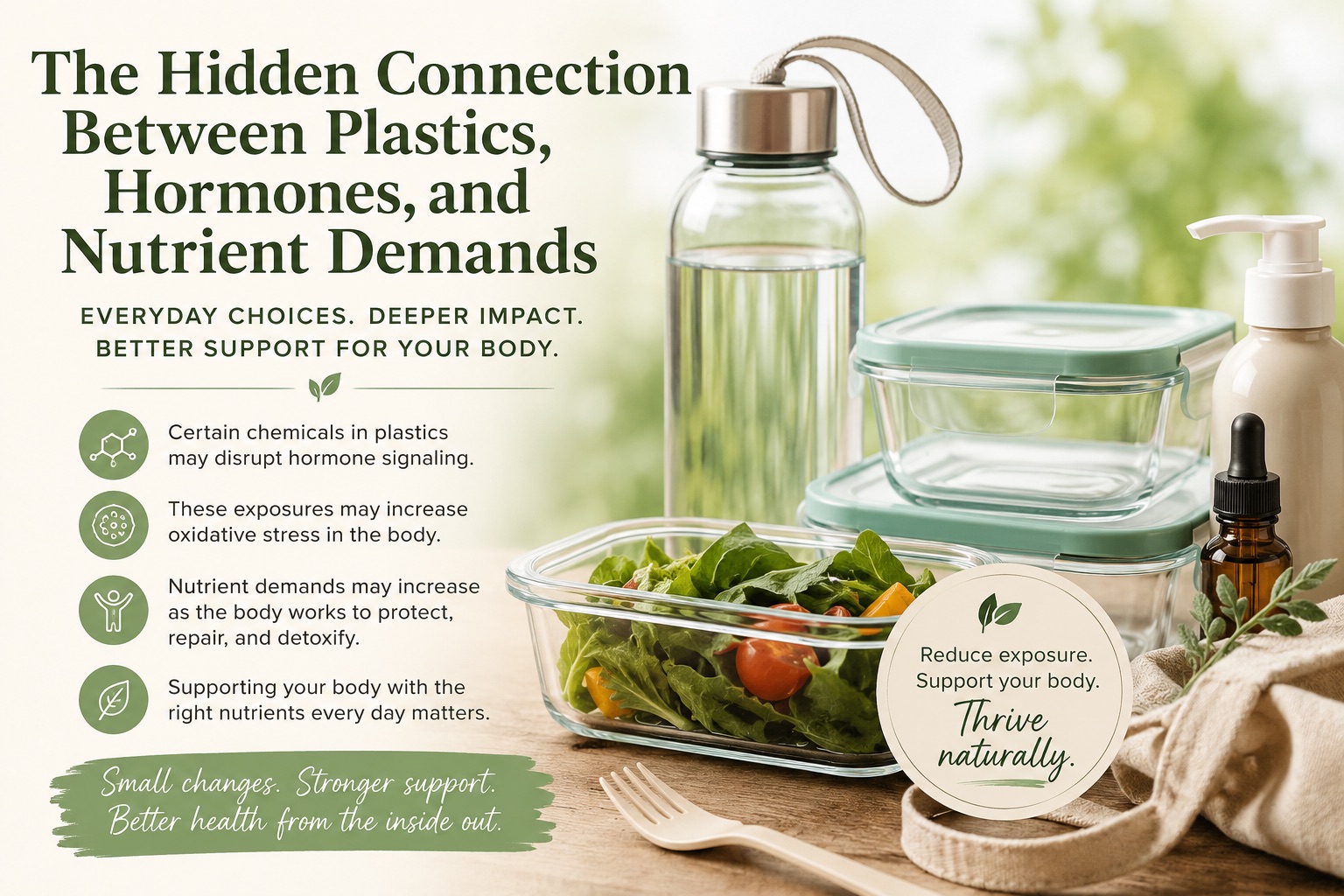
The Hidden Connection Between Plastics, Hormones, and Nutrient Demands
Most people think of plastics as an environmental issue.
But what many don’t realize is that certain chemicals commonly found in plastics may also influence the body’s internal environment.
While plastic products offer convenience in our modern world, ongoing exposure to plastic-related chemicals has become an area of growing interest among researchers, particularly regarding hormone balance, oxidative stress, and overall wellness.
At Nutritional Wellness Center, we believe that understanding these everyday exposures can help people make informed choices and better support their health.
Where Are Plastics Found?
Plastic exposure can occur through many common items we use every day, including:
🥤 Plastic water bottles
🥡 Takeout containers
🍱 Food storage containers
🛍 Food packaging
🧴 Personal care product packaging
🧾 Thermal receipt paper
🚰 Drinking water
Because these exposures are so common, most people encounter them regularly without giving them much thought.
Plastics and Hormone Signaling
Certain chemicals used in plastic manufacturing have been studied for their potential to interact with the body’s hormone signaling systems.
These compounds are often referred to as endocrine disruptors because they may influence how hormones communicate throughout the body.
Hormones play important roles in many areas of wellness, including:
✨ Energy production
✨ Mood
✨ Sleep
✨ Metabolism
✨ Reproductive health
✨ Stress response
This does not mean that every symptom is caused by plastic exposure. However, understanding potential environmental influences can provide a broader perspective when looking at overall health patterns.
The Oxidative Stress Connection
Another reason plastics have received attention is their potential relationship with oxidative stress.
Oxidative stress occurs when the body is managing more stress than its natural antioxidant defenses can comfortably keep up with.
Everyday factors that may contribute to oxidative stress include:
🌎 Environmental pollutants
🍟 Processed foods
😴 Poor sleep
🌀 Chronic stress
🧴 Chemical exposures
When oxidative stress increases, the body’s demand for antioxidant nutrients may also increase.
Why Nutrients Matter
One of the most overlooked aspects of detoxification support is nutrition.
Your body relies on nutrients every day to support:
💚 Natural detoxification pathways
💚 Antioxidant defenses
💚 Cellular repair
💚 Energy production
💚 Immune resilience
Some of the nutrients involved in these processes include:
🥩 Protein and amino acids
🍊 Vitamin C
🌻 Vitamin E
💛 Selenium
💛 Zinc
🌾 B vitamins
🌿 Glutathione-supportive nutrients
Without adequate nutritional support, the body may have a harder time keeping up with everyday demands.
This is one reason why wellness is about much more than avoiding exposures.
It’s also about providing the body with the resources it needs to function efficiently.
Small Changes Can Make a Difference
The goal is not perfection.
It would be nearly impossible to eliminate every source of plastic exposure.
Instead, consider simple changes such as:
💧 Using a stainless steel or glass water bottle
🥗 Choosing fresh foods when possible
🔥 Avoiding heating food in plastic containers
🥡 Using glass food storage containers
🧼 Selecting cleaner personal care products when practical
Small steps, practiced consistently over time, may help reduce overall exposure while supporting healthier daily habits.
Looking Beyond Symptoms
Many people feel frustrated because they are trying to eat well and make healthy choices, yet still don’t feel their best.
Sometimes the missing piece isn’t a single food, supplement, or lifestyle habit.
It may be helpful to look at the bigger picture, including nutrition, stress, environmental exposures, sleep, and overall body support.
At Nutritional Wellness Center, we use Nutrition Response Testing as one tool to help identify patterns and better understand what the body may need support with.
Our goal is not simply to manage symptoms.
Our goal is to help people uncover potential underlying factors and create practical, personalized wellness strategies.
The Bottom Line
Plastic exposure is a part of modern life.
While it’s impossible to avoid completely, understanding how environmental exposures may influence hormone signaling, oxidative stress, and nutrient demands can help you make more informed decisions.
The focus shouldn’t be fear.
The focus should be support.
By prioritizing nutrient-dense foods, quality protein, healthy lifestyle habits, and reducing unnecessary exposures where possible, you can help provide your body with the tools it needs to thrive.
If you’re feeling tired, foggy, or like your body isn’t responding the way it used to, it may be time to stop guessing and start looking deeper.
In health,
Sophie Alexander
Owner and Lead Practitioner