

02
Oct
Nutrition Response Testing®: Why You May Still Feel Stuck With Your Health
Have you ever felt like you’re doing everything right for your health, yet you’re still not feeling better?
Maybe you’ve changed your diet, tried different supplements, worked on managing stress, and made an effort to get more sleep. But you’re still struggling with fatigue, digestive concerns, brain fog, stubborn weight, or simply not feeling like yourself.
I hear this from people all the time.
Many of the clients who come to Nutritional Wellness Center have already spent years searching for answers. They’ve worked with different practitioners, tried numerous approaches, and become frustrated because they’re still not making the progress they’d hoped for.
Sometimes we’re the last place they turn.
One of the first things I explain is that we need to look beyond the symptoms and identify what may be getting in the body’s way of healing.
That’s the foundation of our approach at Nutritional Wellness Center.
Why Your Body May Be Struggling to Make Progress
Your body relies on many interconnected systems to function properly.
Your digestive system breaks down food and helps absorb nutrients. Your liver processes substances produced within the body and encountered through the environment. Your immune system helps protect you from illness, while your nervous system coordinates and regulates countless processes throughout the day.
These systems also depend on adequate nutritional support.
When the body isn’t receiving or utilizing nutrients effectively, normal physiological functions can suffer. Nutritional deficiencies can contribute to fatigue, weakness, impaired immune function, and other health concerns.
But simply taking more supplements or following a healthier diet doesn’t necessarily address every factor affecting a person’s well-being.
This is why we focus on identifying potential barriers to healing.
Within our Nutrition Response Testing® framework, we explore specific categories of stressors and develop individualized nutritional support programs.
The Five Main Barriers to Healing
At Nutritional Wellness Center, our approach focuses on five main categories:
1. Food Sensitivities
Certain foods may contribute to digestive discomfort or other reactions in susceptible individuals. We consider food-related concerns when developing personalized dietary recommendations.
2. Chemical Toxicities
Certain chemicals can interfere with normal biological functions when exposure reaches harmful levels. Understanding environmental and lifestyle factors is an important part of a person’s health history.
3. Heavy Metal Toxicities
Metals such as lead and mercury can affect neurological and organ function at toxic exposure levels. We consider potential exposure concerns within our framework.
4. Immune Challenges
The immune system responds to numerous challenges, including bacteria, viruses, and parasites. Nutrition and overall health play important roles in supporting normal immune function.
5. Scars
Previous surgeries, injuries, and scars are part of a person’s health history. Within Nutrition Response Testing®, we also explore scars as potential stressors.
These five categories form the foundation of how we approach possible barriers to healing.
What Is Nutrition Response Testing®?
Nutrition Response Testing® is a non-invasive assessment system developed by Dr. Freddie Ulan.
It is central to the personalized nutritional approach we use at Nutritional Wellness Center.
The process has two main parts:
The analysis: Assessing responses in different areas of the body using the Nutrition Response Testing® muscle-testing method.
The personalized health improvement program: Developing a specific nutritional support plan based on the assessment and the client’s individual needs.
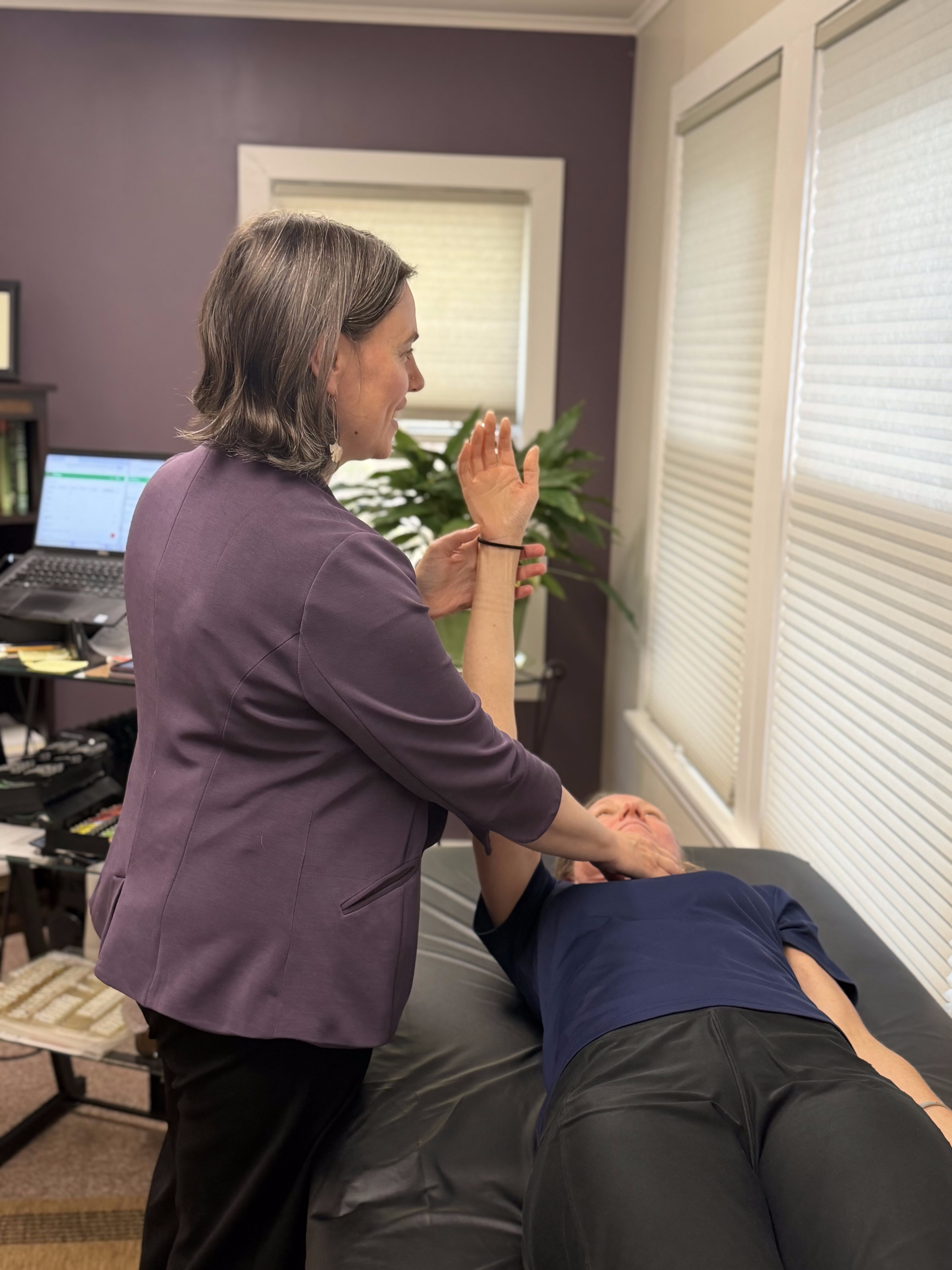
During the analysis, the practitioner contacts selected areas of the body while evaluating the muscle response of the client’s extended arm.
Within the Nutrition Response Testing® system, changes in muscle response are interpreted as indications of stress in the areas being assessed.
We use this method to explore the five-barrier framework and determine priorities for the client’s nutritional wellness program.
The goal is not to give everyone the same recommendations. It’s to develop an individualized approach based on the person’s assessment, health history, nutrition, and wellness goals.
What Happens After the Assessment?
This is the part of our process that I really want people to understand.
Identifying potential barriers is only the beginning.
Our next step is to create a targeted nutritional program to support the body’s needs.
Depending on the individual, that program may include:
Targeted Dietary Advice
We evaluate eating habits, nutritional intake, and food-related concerns.
Some clients need to adjust the foods they’re eating. Others need more consistency, better meal composition, or support for adequate nutrient intake.
We don’t believe every person needs the same diet.
Whole-Food Nutritional Supplementation
We use whole-food nutritional supplements and other appropriate nutritional products as part of our individualized programs.
Through the Nutrition Response Testing® approach, we assess supplement responses and use that information to help guide our recommendations.
The goal is to support normal physiological function with a program tailored to the individual rather than introducing supplements at random.
Lifestyle Changes
Nutrition is only one part of the bigger picture.
Sleep, stress, physical activity, hydration, and everyday habits can influence how someone feels.
We help clients make realistic changes that support their overall wellness and fit into their daily lives.
Why We Reassess at Every Visit
One thing I’ve learned over the years is that health improvement isn’t always a straight line.
A person may make progress in one area while discovering another concern that needs attention.
That’s why follow-up visits are such an important part of our Nutrition Response Testing® process.
We reassess the areas being monitored, discuss the client’s progress, and adjust the nutritional program as needed.
Within our framework, different patterns may become apparent as we work through the program.
I often compare this process to opening a combination lock.
You need the right numbers in the right sequence.
Rather than overwhelming someone with dozens of changes all at once, we focus on prioritizing support and adjusting it over time.
Two People Can Have the Same Symptoms and Need Different Support
I see this frequently in practice.
Two people may come to us struggling with fatigue, poor sleep, and digestive discomfort.
But their histories, lifestyles, nutritional needs, and underlying medical circumstances may be completely different.
It wouldn’t make sense to automatically give them identical programs.
This is why personalized care matters so much to me.
I want to understand the person sitting in front of me, including what they’ve already tried, what they’re struggling with, and what they hope to accomplish.
From there, we can create a plan that makes sense for their individual needs.
You Don’t Have to Keep Guessing
If you’ve spent years searching for answers, I understand how frustrating that experience can be.
And I know how much it means when someone finally takes the time to listen.
At Nutritional Wellness Center in Ithaca, NY, our focus is on exploring potential barriers to healing, providing targeted nutritional support, and helping clients move forward with a personalized wellness program.
If you’re ready to learn more about our approach, we’d love to have a conversation.
Ready to Take the Next Step?
If you’ve been struggling with your health and feel like you’ve tried everything, we’d love to hear your story.
At Nutritional Wellness Center, we focus on identifying potential barriers to healing and developing personalized nutritional programs to help you move forward.
Schedule an Initial Assessment to learn more about our approach and how we can support your health goals.
📞 607-277-1964 Nutritional Wellness Center | Ithaca, NY
Educational note: Nutrition Response Testing® is a complementary, non-diagnostic assessment approach. Muscle testing has not been scientifically established as a reliable diagnostic method for identifying the five barriers, nutritional deficiencies, or organ dysfunction. Our nutritional wellness services do not replace appropriate medical evaluation or treatment.