


19
May
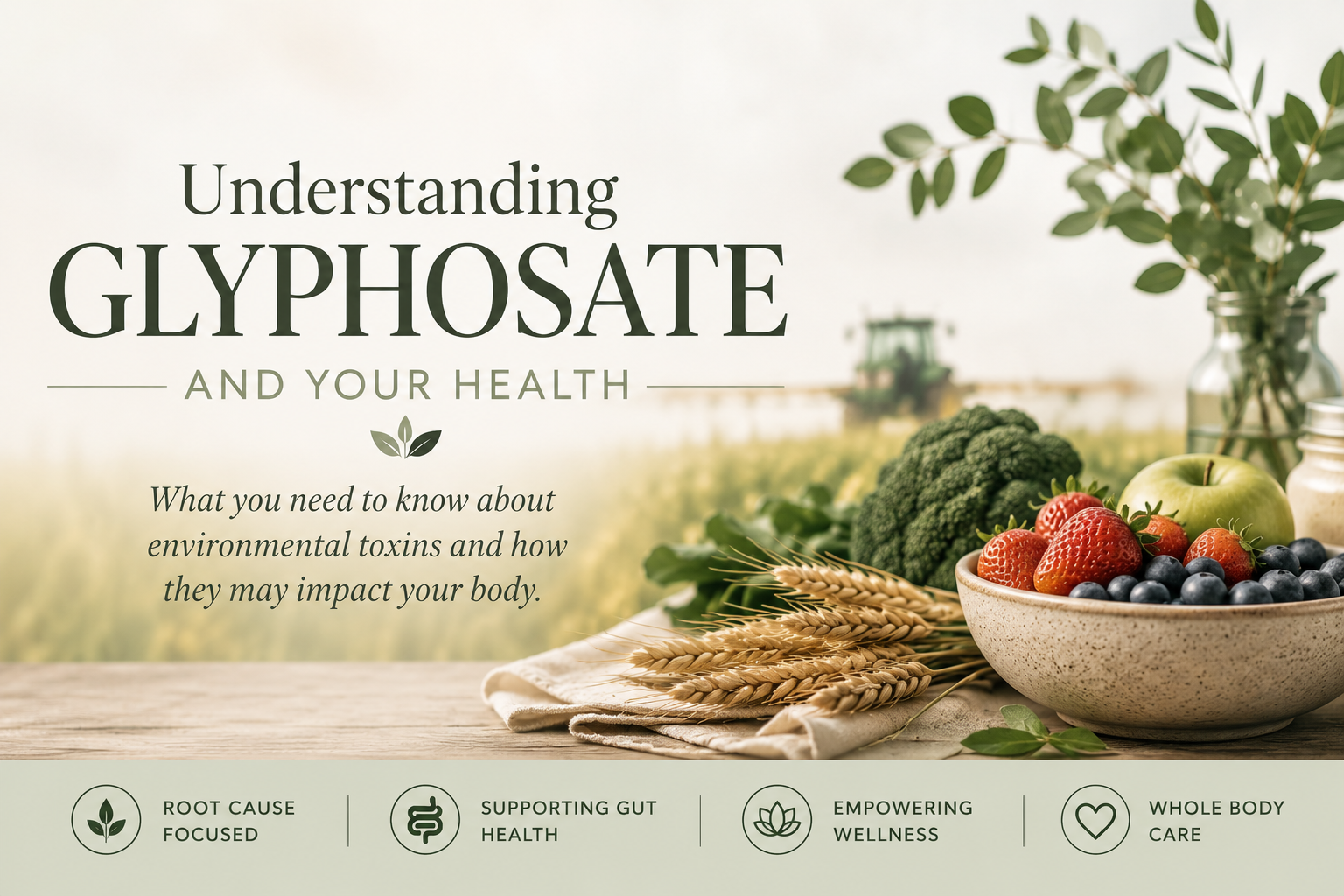
Could Glyphosate Be Affecting Your Health?
Could Glyphosate Be Affecting Your Health?
If you’ve been feeling exhausted, bloated, inflamed, foggy, or just “not like yourself,” you’re not alone.
More and more people are trying to eat healthier and take better care of themselves, yet they still feel like their body isn’t responding the way it used to. One reason practitioners are paying closer attention to this is the growing conversation around environmental toxic burden, including exposure to glyphosate.
What Is Glyphosate?
Glyphosate is one of the most widely used herbicides in agriculture. It’s commonly used on crops like wheat, oats, corn, soy, and legumes. For many people, food is the most common source of exposure.
This doesn’t mean these foods are automatically harmful. The concern is more about repeated, low-level exposure over time, especially when combined with other stressors like poor sleep, processed foods, chronic stress, and inflammation.
Why Does It Matter?
One of the biggest areas of concern involves the gut microbiome.
Research suggests glyphosate may impact beneficial gut bacteria and contribute to inflammation and intestinal stress in animal and mechanistic studies.
Think of the gut like a garden. When the environment becomes less balanced, the body may have a harder time supporting:
• Digestion
• Immune function
• Hormones
• Energy
• Mood
Some researchers are also exploring possible connections between glyphosate exposure and:
• Fatigue
• Brain fog
• Hormonal imbalance
• Oxidative stress
• Nervous system inflammation
The important thing to understand is that glyphosate is likely not the only cause of symptoms. It may simply be one more stressor added to an already overwhelmed system.
A Balanced Perspective
This topic is still debated.
Regulatory agencies generally state current exposure levels are considered safe, while many functional and integrative practitioners believe newer research raises enough questions to justify reducing exposure where possible.
The goal is not fear.
The goal is awareness.
Simple Ways to Reduce Exposure
You do not need to overhaul your entire life overnight.
A few realistic steps can make a meaningful difference over time:
• Choose organic for foods you eat most often when possible
• Wash produce thoroughly
• Reduce processed food intake
• Limit lawn and garden herbicide use
• Support the body with quality sleep, hydration, movement, fiber, and whole foods
Small changes matter.
At Nutritional Wellness Center, we believe symptoms are often signals that the body needs more support, not just symptom management.
Environmental stressors like glyphosate may be one piece of the bigger picture when it comes to fatigue, gut issues, inflammation, and hormone imbalance.
You do not need to live in fear of every toxin. But understanding how modern exposures may impact the body can help you make more informed, empowering choices for your health.
STUDIES:
* [https://pmc.ncbi.nlm.nih.gov/articles/PMC10330715/](https://pmc.ncbi.nlm.nih.gov/articles/PMC10330715/)
* [https://pubs.rsc.org/en/content/articlelanding/2024/fo/d4fo00660g](https://pubs.rsc.org/en/content/articlelanding/2024/fo/d4fo00660g)
* [https://pmc.ncbi.nlm.nih.gov/articles/PMC9101768/](https://pmc.ncbi.nlm.nih.gov/articles/PMC9101768/)
* [https://www.frontiersin.org/journals/toxicology/articles/10.3389/ftox.2024.1474792/full](https://www.frontiersin.org/journals/toxicology/articles/10.3389/ftox.2024.1474792/full)
* [https://www.fda.gov/food/pesticides/questions-and-answers-glyphosate](https://www.fda.gov/food/pesticides/questions-and-answers-glyphosate)
* [https://www.epa.gov/ingredients-used-pesticide-products/glyphosate](https://www.epa.gov/ingredients-used-pesticide-products/glyphosate)
* [https://npic.orst.edu/factsheets/glyphogen.html](https://npic.orst.edu/factsheets/glyphogen.html)
* [https://detoxproject.org/wp-content/uploads/2024/12/Glyphosate_Contamination_Report_Final1.pdf](https://detoxproject.org/wp-content/uploads/2024/12/Glyphosate_Contamination_Report_Final1.pdf)
* [https://publichealth.berkeley.edu/articles/spotlight/research/childhood-exposure-to-common-herbicide-may-increase-the-risk-of-disease-in-young-adulthood](https://publichealth.berkeley.edu/articles/spotlight/research/childhood-exposure-to-common-herbicide-may-increase-the-risk-of-disease-in-young-adulthood)